


Most firms are still somewhere on their cloud adoption journey, but whether fully on-prem, cloud, or a blend - key data about people, clients, and projects are not fully connected. This presents a missed opportunity in not using this data to improve how the firm runs. Not the cliche of “actionable insights” from reporting, but using the data operationally to deliver more work, with more profit.
Tying those data sources into a coherent view of the firm’s ability to deliver – a “capacity lake” if you will.
Why your data feels like a bog
Murky, opaque, dirty... terrifying?
In an accounting firm, your people and project data typically lives across:
Practice / engagement management (IRIS, CCH, etc.): clients, engagements, budgets, job codes, service lines.
Finance & ERP (Dynamics, Certinia): billing, WIP, realisation
CRM (Salesforce): pipeline, upcoming engagements, clients, budgets
HR & talent systems (Workday, LCVista): grades, teams, offices, working patterns, skills, rates, time-off
Timekeeping (Laurel, Cloudcapcha): actual hours, realization
Plus a long tail of spreadsheets...
The spread will be tighter if you have only a few solutions, but the rise of best-of-breed cloud software means tech stacks and data sources are rapidly increasing for accounting firms.
Integrations may exist between these tools, but usually serve a specific purpose such as triggering workflows between solutions, or reconciling the source of truth of a record type that is used in multiple systems. They can’t answer questions such as:
“Where will we run out of senior audit capacity in Q3?”
“Which individuals are at risk of being overbooked on fixed-fee work?”
“Where could we move work between offices or service lines without impacting quality?”
Even if you have a data lake, IT and analysts will dread these questions coming from leadership if it means wading into a hard to navigate bog of data for one-off extracts and Power BI models.
Why good, integrated capacity data is vital for AI applications
The Resource Management Institute (RMI) is blunt about this: data quality and governance are the biggest challenges to effective resource management. Disconnected, poor data impacts capacity planning and work allocation decisions even when doing it manually. It’s critical if you want to use AI scheduling.
In recent RMI research, resource management leaders called out “lack of quality data” as their largest governance issue and stressed the need for data on the “health of the data” itself.
If AI is going to recommend who should work on which engagement, when, it needs:
-
Reliable information about people (skills, grade, availability, rates).
-
Real-time engagement context (budgets, fees, deadlines, margin targets).
-
Timekeeping and actuals for pivoting live engagement schedules
Otherwise, you’re just automating the “garbage in, garbage out” problem RMI warns about: the AI will confidently optimise based on bad or incomplete data. (Resource Management Institute)
Whether the data is coming straight from SaaS systems or via a data lake in Azure/AWS/GCP, the goal is the same: a consistent, governed model that treats capacity data as an asset.
Where Beeye fits in your practice management
Beeye isn’t trying to be your data lake. Rather, it integrates with your other systems (including a data lake if you’ve built one) to centralise all relevant information in a single place that engagement managers and operations teams then use to see capacity, allocate work, and manage conflicts in real time. Partners can see the firm-wide utilization, realisation, capacity and profit reports they need without putting demands on your team for data pulls.
- Allocate work based on availability, skills, budgets and margin targets.
- See planned vs scheduled vs actual hours in one place, early enough to change course.
- Export the same structured model back into your analytics layer (often Power BI)
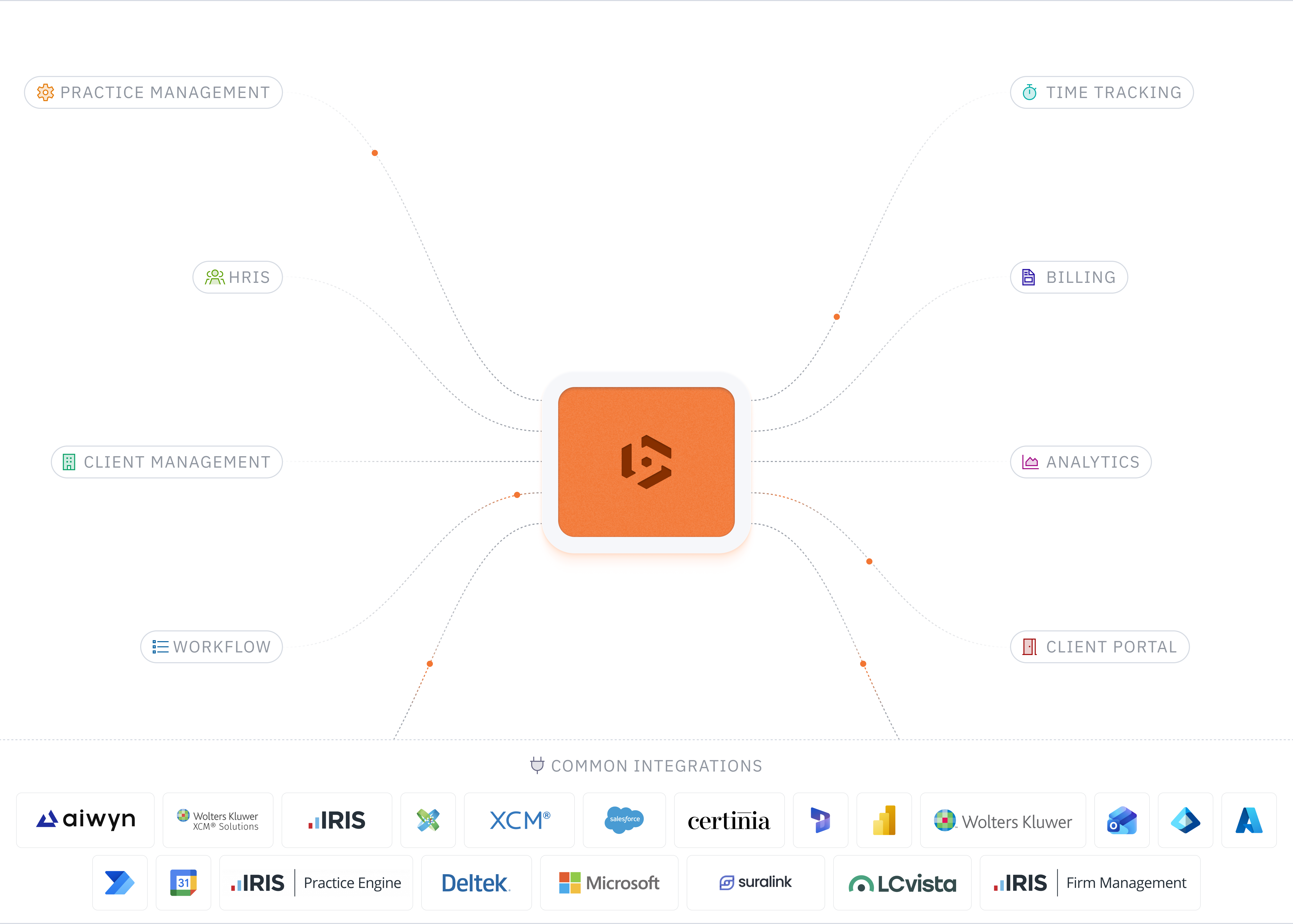
For firms without a data lake, Beeye helps you bridge the gaps between disconnected systems and finally act on the data you already own. For firms with a data lake, Beeye becomes the operational front-end that turns that curated data into concrete decisions about who does what, when – and what that means for profitability.
Either way, integrating these sources into a coherent capacity picture is no longer a “nice to have”. It’s the prerequisite for both better manual scheduling and any serious attempt at AI-driven resource management.